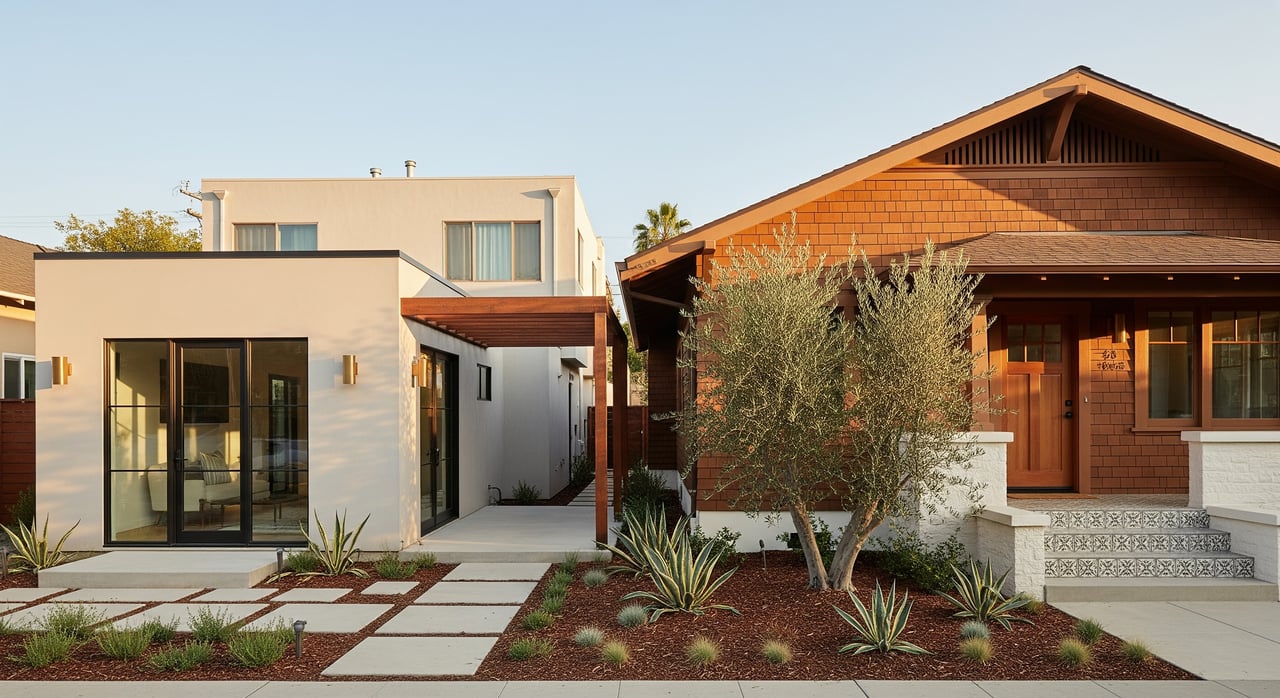
Thinking about covering your mortgage by living in one unit and renting another in Highland Park? You have two strong paths to consider: add an ADU to a single‑family home or buy a duplex and rent the second unit. Each route has different timelines, financing options, and rules in the City of Los Angeles.
In this guide, you’ll learn how both strategies work, what permits and costs to expect, how to model returns, and when each option tends to make more sense in Highland Park. You’ll also get a practical checklist so you can move forward with confidence. Let’s dive in.
House hacking in Highland Park
House hacking means you live in one dwelling and rent the other to offset costs. In Highland Park, that can look like building an ADU behind an existing single‑family home or buying a legal duplex and owner‑occupying one unit.
Both paths can work well. Your choice usually comes down to your tolerance for construction, your financing plan, your timeline for income, and your parcel’s zoning and overlays.
ADU vs duplex at a glance
ADU on an SFR
- Build a separate dwelling on the same lot as your home. Formats include detached, attached, garage conversion, or a smaller junior ADU inside the main house.
- Pros: strong design control, modern finishes that can command higher rents per square foot, long‑term value add.
- Cons: permitting, construction risk, timeline, and likely changes to property tax assessment based on new construction.
Duplex purchase
- Buy a property with two legal units and live in one.
- Pros: immediate rental income, easier cash flow underwriting for many lenders, clearer short‑term projections.
- Cons: less design control, possible renovation needs, and rent control considerations for older buildings.
Zoning and permits in Los Angeles
Los Angeles follows California ADU laws that have opened the door for many SFR lots to add a unit by right with ministerial approval. Still, parcel‑level details in Highland Park matter.
ADUs in LA: what to verify
- Eligibility and setbacks. Most R1 parcels can add an ADU, but you must confirm setbacks, height, lot coverage, and size limits. Parking rules are often relaxed near transit and in certain conditions.
- LADBS plan check. The city offers checklists and sometimes pre‑approved plans. Your design, utility plans, and site conditions drive review times.
- Overlays and HPOZs. Some Highland Park areas have historic or conservation overlays. Exterior changes visible from the street may require design review, which can affect timing and materials.
- Utilities and fees. Plan for sewer, water, and electrical upgrades or meter decisions. Impact and permit fees vary by scope.
Duplex due diligence
- Legal status. Confirm both units are legal with a certificate of occupancy and permits for past work. Unpermitted units create risk.
- Rent rules. Many duplexes built before October 1978 fall under the City of Los Angeles Rent Stabilization Ordinance. That affects rent increases, evictions, and potential relocation assistance.
Short‑term rental considerations
Los Angeles regulates short‑term rentals for primary residences. ADUs are subject to the same city rules as primary units. If short‑term hosting is part of your plan, confirm current registration and eligibility requirements.
Financing paths that work
Your financing choices often decide which route fits best.
Funding an ADU
- Cash or savings. Simple if you have liquidity.
- HELOC or home equity loan. Uses your existing equity and can close relatively quickly.
- Cash‑out refinance. Replaces your current mortgage with a larger loan to fund construction.
- Renovation loans. Programs like FHA 203(k) or Fannie Mae HomeStyle Renovation can apply to certain ADU scopes. Lender experience with ADUs in LA is key.
- Construction or portfolio loans. Some local lenders offer ADU‑specific products and understand post‑completion appraisals.
Lenders look at credit, after‑improvement value, and loan‑to‑value. Some will credit the ADU’s contribution to value at completion.
Buying a duplex with owner‑occupied loans
- FHA. Allows 1–4 units with as little as 3.5% down for qualifying buyers, within loan limits.
- Conventional. Fannie/Freddie conventional loans typically require higher down payments for 2‑unit properties.
- VA. Qualified veterans can purchase 1–4 units with owner occupancy.
Owner‑occupant financing often secures better rates and terms than pure investor loans, which helps early cash flow.
Costs and timelines to expect
ADU budgets and timing
Your budget depends on whether you convert a garage or build new, the size and layout, utility connections, site complexity, parking, and design choices. Include soft costs such as architectural plans, engineering, plan check and permits, and any required studies. Build in a contingency of 10–20% or more for remodels and tight labor markets.
- Feasibility and design: commonly 1–3 months.
- Permits and plan check: often a few weeks to several months, longer if design review applies.
- Construction: conversions can be 1–3 months, while detached new builds often run 4–9 months.
Duplex purchase and rehab
- Closing timeline: typically 30–60 days.
- Renovations: plan for system upgrades on older properties such as electrical, plumbing, roof, exterior, and potential seismic work. The scope sets your timeline.
How to model returns
Start with conservative assumptions, then replace them with quotes and comps.
- Gather rent comps. Pull local rents for a 1‑bed ADU, and for 1‑ and 2‑bed units in Highland Park duplexes. Use multiple sources and, if possible, input from a local property manager.
- Map operating expenses. Include property taxes, insurance, utilities, management, maintenance, capital reserves, and a vacancy factor.
- Compute key metrics.
- Net Operating Income (NOI) equals gross rent minus operating expenses before debt service.
- Cap rate equals NOI divided by purchase price or total project cost.
- Cash‑on‑cash equals annual cash flow after debt service divided by cash invested.
- Stress test. Run scenarios for construction cost overruns, a 30–60 day vacancy, and rents at 90% of market.
A simple worksheet
- Input acquisition cost or current home value. 2) Add the ADU budget or planned duplex renovations. 3) Enter projected rent for the new unit or the non‑owner unit. 4) Estimate expenses and loan payments. 5) Calculate NOI, cap rate, and cash‑on‑cash. Replace estimates with contractor bids and lender quotes as you go.
When an ADU makes more sense
- You want design control and a modern unit that can command a rent premium per square foot.
- Your lot and zoning support an ADU without heavy discretionary review.
- You value long‑term appreciation and are comfortable with construction timelines and risk.
- You want flexibility to house family or change the unit’s use later.
When a duplex makes more sense
- You prefer immediate rental income and simpler underwriting.
- You want clearer short‑term cash flow and to avoid construction unknowns.
- You find a duplex with legal units, predictable renovation needs, and clean records.
Highland Park market signals
Highland Park has strong demand for both owner‑occupant and investor properties given its proximity to major job centers and local amenities. That demand affects acquisition pricing for duplexes and land values for SFRs with ADU potential. Rents vary by unit condition and by micro‑location, including corridors like York and Colorado versus quieter residential pockets. Use multiple rent data sources and a local perspective to fine‑tune your assumptions.
A practical checklist before you decide
Parcel and property
- Confirm zoning and allowed uses for the specific parcel.
- Check for HPOZ or conservation overlays and any design review steps.
- Verify lot size, setbacks, and placement options for an ADU.
- For a duplex, confirm certificates of occupancy and permits for both units.
Regulatory and tenancy
- Verify whether an existing duplex falls under the Rent Stabilization Ordinance.
- Review current leases and tenant protections.
- Understand short‑term rental registration rules if that is part of your plan.
Financial
- Obtain three contractor estimates for an ADU, including soft costs.
- Get pre‑qualification and quotes for construction financing versus purchase financing.
- Request rent rolls and expenses for any duplex under consideration, or line up ADU rent comps.
- Consult the County Assessor about likely changes to assessed value after an ADU is built.
Operational
- Plan parking and access for a new unit and confirm requirements.
- Assess utility capacity, meter options, and potential connection fees.
- Align insurance coverage for construction and landlord exposure.
Community and design
- Understand HPOZ design standards and review timelines where applicable.
- Consider location context that affects rentability, such as transit access and walkability.
Next steps
If you’re weighing ADU versus duplex in Highland Park, start with parcel verification and lender conversations. Price contractor scopes early, and build a simple return model you can update with hard numbers. If you want help sourcing ADU‑friendly lots, vetting duplexes, or building a plan that fits your goals, our team can guide you from feasibility through closing and beyond.
Ready to explore your options? Reach out to the Haynes Group for a tailored consultation.
FAQs
What is the difference between an ADU and a duplex in Los Angeles?
- An ADU adds a new dwelling to a single‑family lot, while a duplex is a property with two legal units you purchase as is and typically rent one while living in the other.
How do Los Angeles zoning and overlays affect Highland Park ADUs?
- Most SFR lots are eligible for an ADU, but setbacks, size, and HPOZ design review can change what you can build and how long approvals take.
What financing works best for an ADU in Highland Park?
- Many owners use HELOCs, cash‑out refinances, renovation loans, or construction loans from lenders experienced with ADUs in LA.
Can I buy a Highland Park duplex with a low down payment?
- FHA offers owner‑occupied financing for 1–4 units with down payments as low as 3.5% for qualifying buyers within loan limits.
Are older Highland Park duplexes under rent control?
- Duplexes built before October 1978 often fall under the City of Los Angeles Rent Stabilization Ordinance, which limits rent increases and sets eviction rules.
Will adding an ADU change my property taxes in Los Angeles County?
- New construction typically increases assessed value, so you should plan for a property tax change and confirm details with the County Assessor.
Can I use an ADU or duplex unit for short‑term rentals in LA?
- Los Angeles regulates short‑term rentals with registration and eligibility rules that apply to both ADUs and primary units, so verify current requirements before listing.