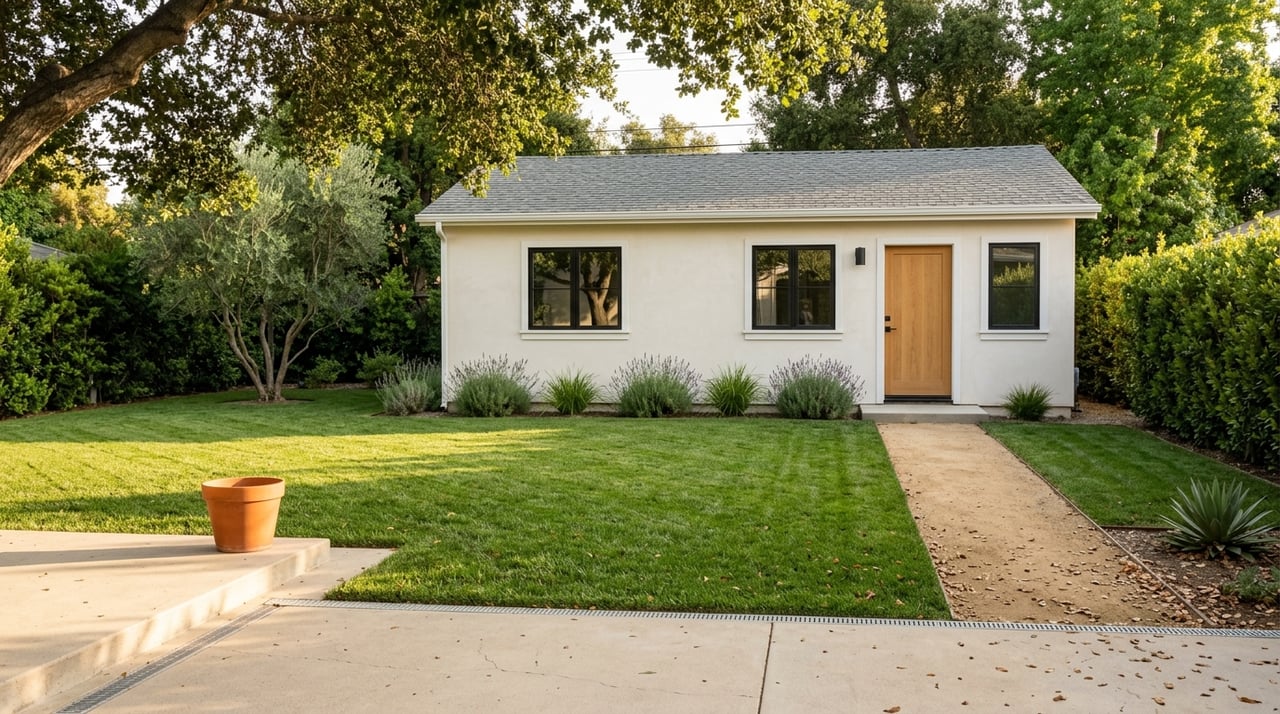
Thinking about adding more space in Altadena without giving up the home and lot you already love? An accessory dwelling unit, or ADU, can create room for family, provide a separate living area for a caregiver, or open the door to long-term rental income. If you are weighing whether an ADU makes sense for your property, this guide will help you understand what is possible in Altadena, what rules matter most, and how to plan with long-term value in mind. Let’s dive in.
Why ADUs matter in Altadena
In Altadena, ADUs are often less about chasing trends and more about solving real life needs. You may want space for adult children, aging family members, guests, or a tenant whose rent could help offset project costs over time.
Altadena also has a unique planning context. Because it is an unincorporated Los Angeles County community, ADU rules are handled through LA County Planning, not a separate city department. That makes it especially important to understand county standards, local lot conditions, and any property-specific constraints before you start designing.
What Altadena homeowners can build
For many single-family properties, LA County allows more flexibility than owners expect. On a single-family lot, the county allows a maximum of one junior ADU, one attached ADU, and one detached ADU.
A junior ADU, or JADU, must be created within the main home and can include up to 500 square feet of interior livable space. It also needs its own exterior access. According to the county’s ADU ordinance materials, these units can be used as flexible living space for family members, caregivers, or rental housing.
Attached vs. detached ADUs
An attached ADU is built as part of the main house or added onto it. A detached ADU is a separate structure elsewhere on the lot. Which option makes more sense often depends on your yard layout, privacy goals, access, and budget.
Detached ADUs can offer more separation and privacy. Attached ADUs may be easier to integrate with the existing home and site conditions, especially if you are trying to preserve outdoor space.
Garage conversions and existing structures
If you already have a garage or another accessory structure, conversion may be worth exploring. Under state guidance, conversions within an existing residence or accessory structure generally do not have to meet the same setback rules as new construction.
LA County also offers a streamlined garage-conversion path for eligible projects. For some homeowners, that can make conversion one of the more efficient ways to add usable living space.
Key rules to know before you plan
ADU rules have become much more homeowner-friendly in recent years, but details still matter. In Altadena, a few points are especially important.
Minimum size and setbacks
California rules prevent local standards from blocking an ADU of at least 800 square feet if it meets four-foot side and rear setbacks. Front-yard setbacks also cannot be used to prevent that minimum-size ADU. The state’s current ADU handbook is clear on these protections.
State law also does not allow minimum lot-size restrictions for ADUs. That means even smaller parcels may still have viable ADU options, depending on the existing home, access, and site constraints.
Owner-occupancy rules
For standard ADUs, owner occupancy is no longer required. That gives homeowners more flexibility if they are planning for a long-term rental or future use.
JADUs follow different rules. If a JADU shares sanitation facilities with the main home, owner occupancy is required. If it has separate sanitation, owner occupancy is not required. The state handbook also notes that JADUs cannot be used as short-term rentals and, if rented, must be leased for more than 30 days.
Parking may be easier than expected
Many owners assume parking will be the biggest obstacle, but that is not always true. State law caps ADU parking at one space per unit or bedroom, whichever is less, allows tandem parking, and does not allow guest-parking requirements for ADUs.
It also prohibits replacement parking when a garage, carport, covered structure, or uncovered space is removed for an ADU. In some situations, parking exemptions apply, including for properties within one-half mile of transit, in a historic district, or where the ADU is created within an existing residence or accessory structure.
That said, LA County notes that parcels in a Very High Fire Hazard Severity Zone may still trigger one off-street parking space unless an exemption applies. In foothill areas like Altadena, that is worth checking early in the process.
Historic and site-specific issues in Altadena
Altadena is not a one-size-fits-all market, especially from a planning standpoint. County planning notes that the community includes county landmarks, a pending historic district, and properties that may be eligible for state or national historic listing.
That matters because LA County’s updated ADU rules include objective standards for properties with historic resources. If your home has historic significance, or if you suspect it may, it is smart to confirm that upfront through LA County Planning.
Fire recovery and rebuilding context
Some Altadena property owners are also navigating the aftermath of the Eaton Fire. LA County’s Eaton Fire recovery resources include rebuilding information and fee-waiver guidance where applicable.
If your property is part of a rebuild or larger recovery plan, that context may shape the timing, cost, and permit path for an ADU. It can also affect how you prioritize future flexibility on the site.
Trees and discretionary approvals
Not every ADU is purely a simple over-the-counter approval. LA County notes that if your parcel needs discretionary approvals, such as an Oak Tree Permit, those approvals must be secured before ADU or JADU approval.
This is one reason why early due diligence matters. A lot that looks straightforward on paper may still have physical or regulatory issues that affect design, timing, or cost.
What the approval process looks like
In Los Angeles County, ADUs are processed through EPIC-LA or the local Building and Safety District Office. Plan check starts with a completeness review, then moves through agency referrals, and permits are issued only after all required approvals are in place.
For many homeowners, the good news is that most ministerially approved ADUs and JADUs are CEQA-exempt. That helps keep the process faster and more predictable than a fully discretionary project.
Typical timelines
Under current state guidance, a local agency must determine whether an ADU application is complete within 15 business days. If an incomplete or denied application is appealed, a final written determination must be issued within 60 business days after the appeal is received.
There is also a faster path for some detached ADUs. If you use a preapproved plan, or a plan identical to one previously approved, the application must be approved or denied within 30 days.
Standard plan options
LA County offers a Standard ADU Plans Program that includes a free county catalog and a private-designer catalog. For some owners, starting with a preapproved or nearly preapproved concept can save time, reduce design costs, and simplify decision-making.
That does not mean every lot is plug-and-play. Site grading, utility connections, access, and historic or fire-zone considerations can still shape the final plan.
Budgeting for an Altadena ADU
The most useful way to budget an ADU is to think in ranges, not one universal number. A statewide survey from the Terner Center found a median ADU construction cost of $150,000, or about $250 per square foot. In that same survey, 37% of units cost less than $100,000 and 71% cost less than $200,000.
Those figures are useful benchmarks, but Altadena projects can vary based on slope, utilities, access, foundation work, finishes, fire-zone requirements, and whether you are converting an existing structure or building new.
Fee planning matters too
Fees can have a meaningful impact on your budget. Under current state rules, ADUs at or below 750 square feet are exempt from impact fees. Larger ADUs can be charged proportional fees.
That threshold can influence design strategy. In some cases, staying at or under 750 square feet may improve overall efficiency if your goal is a practical long-term rental or a compact guest house.
Expect utility and inspection variables
Even well-planned projects can hit delays around utilities. The Urban Institute notes that utility approvals are often a major source of delay, and LA County’s process also includes plan check, referrals, and inspections before occupancy.
That is why realistic scheduling matters. A strong plan does not just cover construction costs. It also accounts for professional services, permit timing, utility coordination, and contingency.
How ADUs can add long-term value
The best ADU projects usually do more than add square footage. They make a property more flexible, more functional, and more adaptable to changing needs over time.
In Altadena, common use cases include multigenerational living, a caregiver suite, private space for adult children, or a long-term rental. LA County specifically describes ADUs as living space for family members or caregivers and as rental housing.
Rental income potential
Rental upside is real, but it is not one-size-fits-all. The Terner Center found a median new-ADU rent of $2,000 per month statewide, while a SCAG rent survey included an Altadena listing at $1,675 for 600 square feet.
Those numbers are best used as reference points, not promises. Rent can move up or down quickly depending on privacy, finishes, parking, unit size, and location on the lot.
Check rental registration rules
If you plan to rent out an ADU in unincorporated Los Angeles County, local rental regulations may apply. The county’s Rent Registry and tenant protection framework may apply to eligible rental units, and owners generally must register units and keep that information current.
Before marketing a unit, it is wise to confirm how the property is classified. That step can help you avoid surprises later.
Value is about flexibility
From a resale standpoint, ADUs tend to be most compelling when they add flexibility that future buyers can immediately understand. A well-planned detached cottage, a thoughtful garage conversion, or an attached suite with privacy can widen the pool of buyers who see the property working for their next chapter.
Today’s rule set is also more favorable to ADUs than it was just a few years ago. State guidance now requires local agencies to maintain ADU plan-preapproval programs, use proportional fees, and follow faster review timelines, while standard ADUs no longer require owner occupancy.
Smart ADU planning starts with the property
Before you fall in love with a floor plan, focus on the lot. In Altadena, the right ADU strategy depends on how your parcel actually functions, including access, fire-zone issues, existing structures, trees, topography, privacy, and any historic context.
That is also where thoughtful real estate guidance can help. If you are building for your own use, planning around future resale is still important. If you are considering an ADU before selling, the design, placement, and finish level should align with what buyers in the foothill market are likely to value.
If you want to talk through how an ADU could affect your property’s usability and long-term market appeal, connect with Haynes Group. We bring a design-minded, property-specific perspective to foothill homes and can help you think through the choices that support both daily living and future value.
FAQs
What ADU rules apply to homes in Altadena?
- Because Altadena is unincorporated Los Angeles County, ADUs are regulated through LA County Planning rather than a separate city ordinance.
How many ADUs can you have on a single-family property in Altadena?
- On a single-family lot, LA County allows up to one JADU, one attached ADU, and one detached ADU.
How big can a JADU be in Altadena?
- A JADU can include up to 500 square feet of interior livable space and must be located within the main home with its own exterior access.
Do Altadena ADUs require owner occupancy?
- Standard ADUs do not require owner occupancy, but some JADUs do depending on whether they share sanitation facilities with the main home.
Do you need parking for an ADU in Altadena?
- Not always. State law provides several parking exemptions, but some parcels in Very High Fire Hazard Severity Zones may still require one off-street space unless an exemption applies.
How long does ADU approval take in Los Angeles County?
- State guidance says agencies must determine application completeness within 15 business days, and some detached ADUs using preapproved plans must be approved or denied within 30 days.
How much does it cost to build an ADU in Altadena?
- Costs vary by site and design, but a statewide survey found a median ADU construction cost of $150,000, with many projects coming in below $200,000.
Can you rent out an ADU in unincorporated Los Angeles County?
- Yes, in many cases, but eligible rental units may be subject to the county’s Rent Registry and tenant protection rules, so owners should confirm classification before marketing the unit.