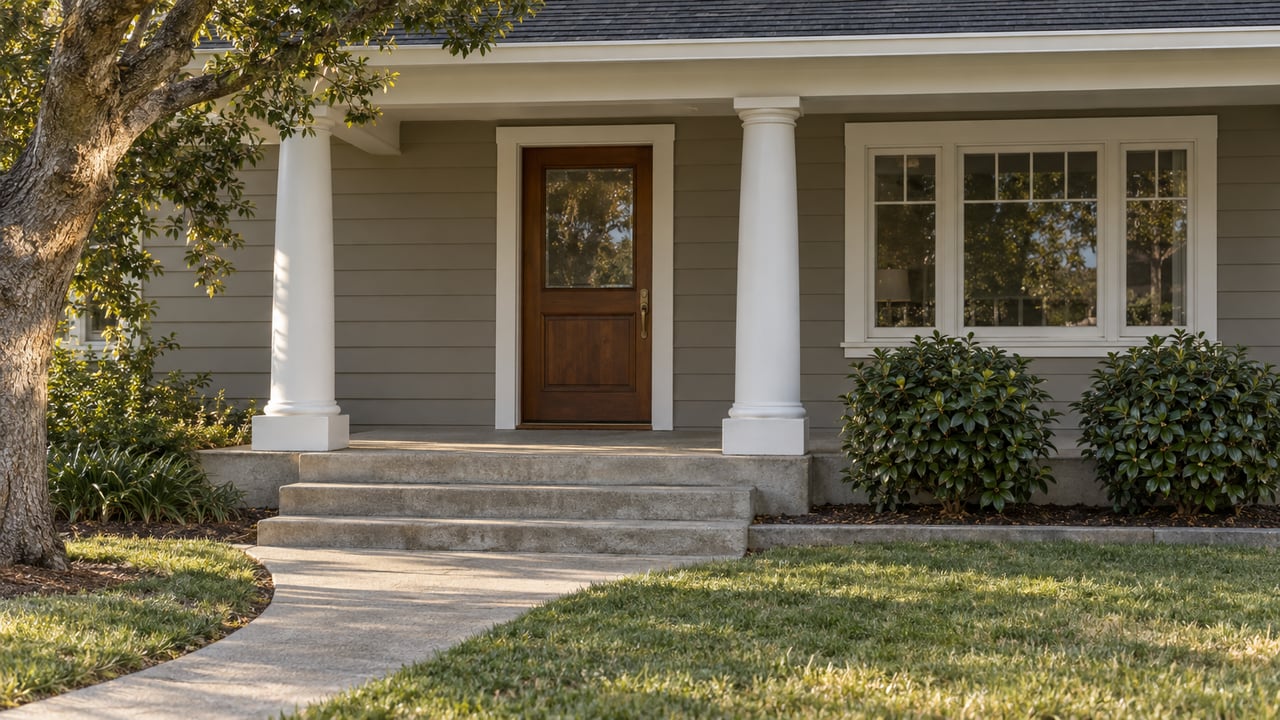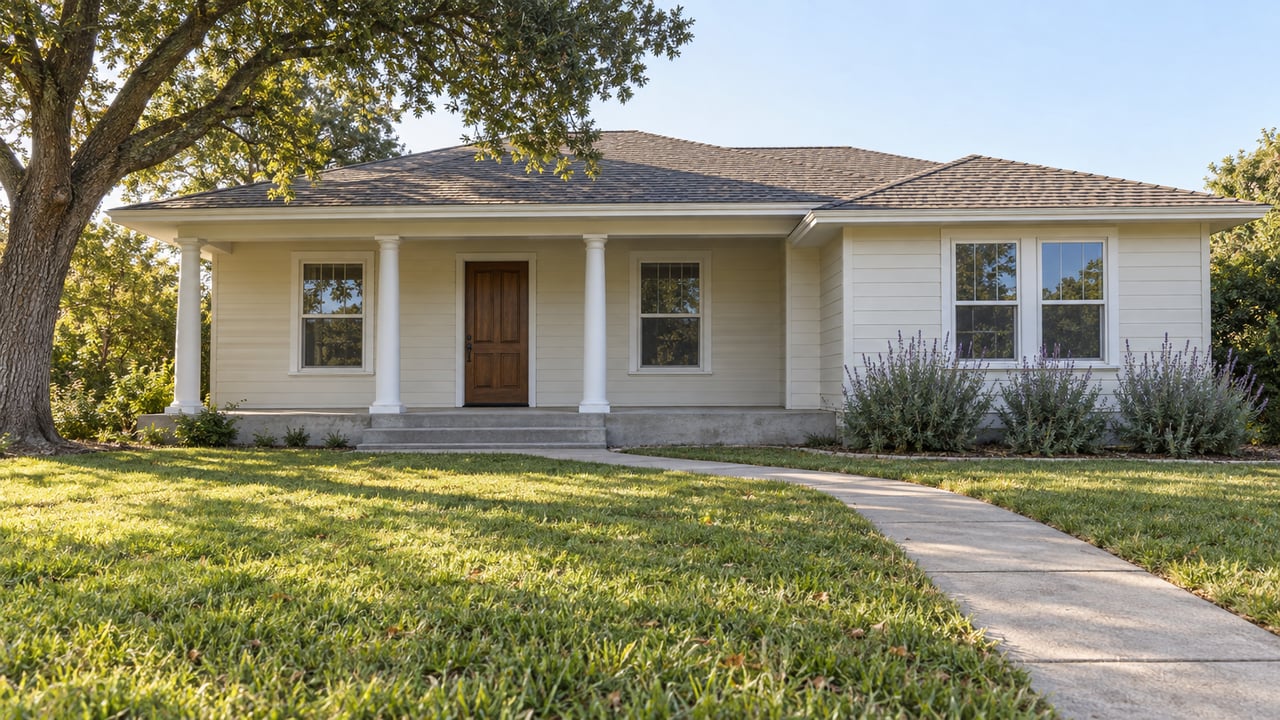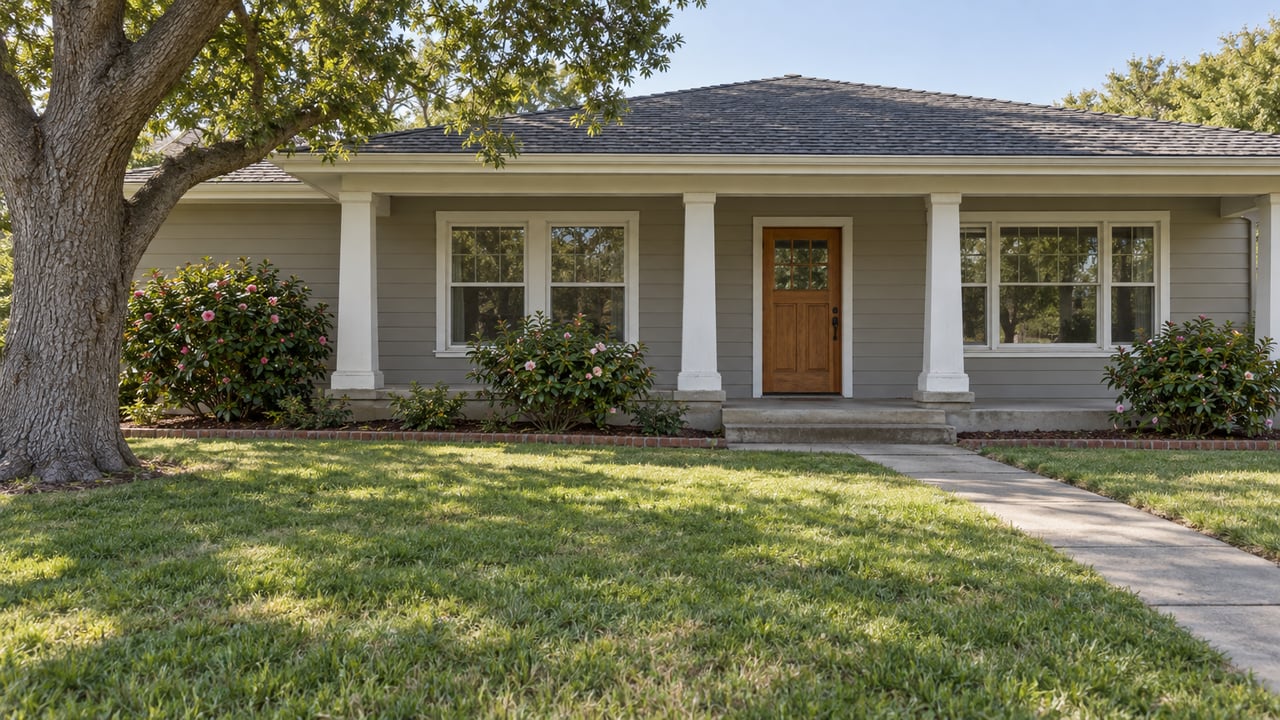
There were no private showings. Every buyer saw the homes at the same open houses. The inspection reports were posted to the MLS for anyone to read. The seller had never lived in any of the houses and could not say what work had been done without permits, so buyers had to investigate for themselves. No offer was reviewed until a single deadline passed. That was how the City of South Pasadena marketed its second group of former Caltrans homes this summer, after marketing began June 9, 2026.
The terms matter because they show what really sets the price of these houses. Square footage and street still count. What decides who can make a winning offer is two other things: which of the state's sales channels a home goes through, and whether the buyer can get a loan on a house that needs real work.
A seller with a 1960s cost basis and no reason to repair
The homes are what remains of the 710 Freeway extension. Caltrans acquired them decades ago, and the extension was never built. The Pasadena Star-News reports that more than 60 South Pasadena properties were once taken for the project, out of roughly 450 homes acquired across El Sereno, South Pasadena and Pasadena.
State law lets South Pasadena buy vacant homes from Caltrans at the price the state paid when it acquired them, with no adjustment for inflation. The homes come to the city in "as is" condition, according to the current text of the law. The South Pasadena Review reported that the city paid about $1.5 million in total for the 12 homes the City Council approved in March. City officials estimated those 12 could bring in around $10 million at today's prices.
The money comes with a requirement. The city's June announcement says state law requires it to use resale proceeds to fund three affordable housing units for every Caltrans property it purchased. A city that bought each home for a fraction of its value, and has to turn the proceeds into housing, has little reason to spend public money fixing them first. So the homes sell the way the city received them. The Review described them as vacant for years and in need of significant maintenance and rehabilitation.
Batch one showed that financing decided who could buy
The first five homes were 216 Fairview, 217 and 225 Fremont, 1707 Meridian, and a three-unit parcel at 726 Meridian that includes 1002 and 1008 Hope. They went on the market in October 2024. LAist reported that thousands of people toured them and that every one sold above its asking price. The 726 Meridian parcel was listed at nearly $1.25 million and closed late in 2024 at $1.72 million. The other four sold for between $1.007 million at 1707 Meridian and $1.45 million at 217 Fremont.
Financing narrowed the buyer pool. According to the South Pasadena Review, city officials found that the cost of repairs made it hard for anyone other than investors to get financing. A house with a damaged floor, peeling paint or boarded windows can fail a standard lender's requirements before price even comes up. A buyer with cash or an investor's financing can ignore that problem. A family relying on a conventional mortgage often cannot.
That first round put $6,960,014 into the city's Affordable Housing Trust Fund in fiscal year 2024–25. The city recorded $357,723 against it as the cost of selling the property, according to the city's FY 2026–27 proposed budget.
Batch two changed who could compete, not the houses
The second group came with the same lack of repairs and a different plan for financing. The city's June 5 announcement listed eight properties:
- 1131 Columbia Street, the historic Columbia House
- 530 and 534 Orange Grove Avenue
- 901 Bonita Drive
- 1037 and 1039 Grevelia Street
- 808 and 822 Valley View Road
- 540 Prospect Avenue
This time the city worked with lenders before the listings went live. The Review reported that this included renovation loans for qualified borrowers, which let a buyer borrow against the estimated value of the home after rehabilitation to pay for the work. Mayor Sheila Rossi explained the goal to the South Pasadena Review: "We wanted to be able to make sure we expanded the pool… making it open to more buyers and people who really want to make South Pasadena home versus more investors."
The sale ran in this order:
- The listings went live on June 9, with offer guidelines and inspection reports posted to the MLS.
- Buyers saw the homes only at scheduled open houses. There were no private showings.
- Cash and financed offers were both accepted. Several lenders had reviewed the inspection reports and prepared financing plans for these specific homes, and buyers could also use their own lender.
- No offer was reviewed before the deadline.
- For every home except Columbia House, buyers were told to check with the City of South Pasadena Planning Division about any restrictions. Columbia House came with historic requirements of its own.
Six of the homes closed between July 22 and August 21, 2026: 530 and 534 Orange Grove, 901 Bonita, 540 Prospect, and 808 and 822 Valley View. Their recorded sale prices ran from $999,000 at 808 Valley View to $1,480,000 at 822 Valley View. 901 Bonita closed at $1,006,000. As of September 2026, Columbia House and 1039 Grevelia were on hold, and no reason has been made public.
Columbia House is a 1910 Craftsman on the city's Inventory of Historic Resources. A buyer there takes on more than an as-is repair bill, because historic requirements shape how the house can be restored. The South Pasadena Preservation Foundation was named as a resource for questions about that process.
For tenants, the price is now set as of 2019
Vacant homes are only one channel. Occupied homes go through Caltrans, which follows a priority order set in state law. Former owners and present occupants come first, followed by offers to qualifying tenants. Caltrans lists a public auction at fair market value as the last option. The South Pasadenan reported in April that tenants had complained about delays, unclear requirements, appraisals they could not see, and disputes over repairs and condition.
AB 2329, by Assemblymember Mike Fong, changed how that price is set. It passed the Assembly 79–0 and the Senate 40–0. Governor Newsom signed it on September 30, 2026 as Chapter 937. Because it is an urgency statute, it took effect immediately. Here is how the three ways a former 710 home now changes hands in South Pasadena compare under the chaptered text and the city's process:
| Tenant purchase from Caltrans | City purchase from Caltrans | City resale to the public | |
|---|---|---|---|
| Price basis | Fair market value as of Oct. 13, 2019, adjusted for condition | Caltrans' original acquisition price, not adjusted for inflation | Whatever buyers bid by the offer deadline |
| Condition | The appraisal accounts for as-is condition and certain deterioration since 2019 | As-is | As-is |
| Property tax under AB 2329 | Assessed at the condition-adjusted price | No special rule | No special rule |
The condition adjustment leaves out land value, cosmetic work, damage caused by the tenant, and anything Caltrans has repaired since 2019. A tenant can pay for their own appraisal and inspection. If Caltrans' final valuation differs materially from what the tenant submits, the department must explain the difference in writing. A purchaser who already has a signed contract or an open escrow has 30 days after being notified to request a recalculated price. Sales that have already closed are not reopened. When asked, Caltrans must also provide property, appraisal, rental and sales records without requiring a nondisclosure agreement.
The table lays out the two prices side by side. A tenant's price now starts from a 2019 baseline. The city's buyers pay whatever the bidding reaches in 2026, and the over-ask results from the first batch show how far that can go. This is a summary of public rules, not legal, tax or lending advice, so anyone in one of these transactions should confirm the details with their own attorney, tax advisor or lender.
What's still open
The Council approved 12 acquisitions in March, and eight were on the June list, so some homes may still come to market later. The proceeds have a likely destination. The Review reported that the city has identified a site at El Centro Street and Mound Avenue for an affordable senior housing development. At the state level, the California State Auditor lists audit 2026-133 of Caltrans' 710 home sales as in progress, with release expected in spring 2027.
Pasadena is a few steps ahead. In February 2026 the city reported that 13 of the 17 vacant Caltrans homes it bought had sold, bringing in $18.47 million, according to the Pasadena Star-News.
Quick answers
Can anyone buy the city's resale homes? Yes. The city's resales are open-market listings, and both cash and financed offers were considered in the 2026 round.
Do the open-market resales carry the 45-year affordability restriction? The city's Caltrans surplus properties FAQ ties the 45-year resale restriction to homes sold at affordable prices. The city's resales are market-rate sales, and their proceeds pay for affordable housing elsewhere.
Does AB 2329 change the price for buyers of the city's resale homes? No. Under the chaptered text, its condition-adjusted price applies to sales to tenants and certain former occupants. The city still buys vacant homes from Caltrans at the original acquisition price and sells them at market.
An as-is house with a public inspection report and a firm offer deadline calls for a different kind of preparation than a staged listing does. You need a realistic repair budget, a loan that can carry it, and a clear read on what the house will be worth once the work is done. If you're weighing a former 710 home, or an older South Pasadena property in similar condition, Haynes Group can walk the house with you and talk through scope, sequence and pricing before you write an offer. Book a consultation and we'll start with the inspection report.